
The relationship between bartender training and civil liability is not hypothetical. In dram shop matters, alcohol service negligence claims, and negligent security cases involving hospitality venues, the adequacy of training is frequently the central factual question.
Educational Content Notice: This page provides educational information about alcohol service training standards and liability concepts. It is not legal advice and should not be relied upon as legal advice. Alcohol laws vary by state and change over time. Operators should consult qualified legal counsel for advice specific to their circumstances. Attorneys researching this material for litigation purposes are encouraged to contact Ryan Dahlstrom directly regarding expert witness engagements.
What was the bartender trained to do? Was the training documented? Did the venue have a defensible program, or just posture? In case after case, the answers to those questions determine outcomes.
This page covers how training and liability actually intersect: the legal framework, the terminology attorneys use, the documentation that matters, the training standards that courts have accepted as reasonable, and the specific elements that separate defensible training programs from indefensible ones. It is written from the perspective of someone who testifies on these questions professionally.
Dram shop liability is the civil liability of establishments licensed to sell alcohol when they serve alcohol to a person who subsequently causes harm to a third party. The term comes from an old name for an establishment that sold alcohol by the ‘dram’ (a small measure). Modern dram shop laws vary significantly by state, but the basic structure is consistent: a licensed establishment that serves alcohol to a visibly intoxicated person or a minor may be civilly liable if that person then causes injury or death to a third party.
Dram shop cases typically arise after an alcohol-involved motor vehicle accident, a bar fight resulting in serious injury, or a suicide or overdose where alcohol service contributed. The injured party (or the estate of a deceased party) sues the establishment that served the alcohol, alongside the individual who caused the direct harm.
A legal concept where a party is held liable for damages regardless of fault or intent. In many jurisdictions, serving alcohol to a minor is a strict liability offense — the bartender’s belief that the customer was of age is not a defense if the customer was in fact a minor. Responsible operations treat this as requiring meticulous ID verification because the bartender’s good faith cannot save them.
A failure to exercise the care that a reasonably prudent person would exercise in similar circumstances. In the dram shop context, negligence is usually framed around whether the bartender or establishment served alcohol to a person who was already visibly intoxicated (a state the bartender should have recognized as a reasonably trained person) and whether the subsequent harm was foreseeable.
Damage or injury that a reasonable person in the defendant’s position could have anticipated as a possible consequence of their actions. The foreseeability doctrine is central to dram shop liability: if it is foreseeable that serving additional alcohol to a visibly intoxicated guest could result in that guest driving impaired and causing harm, the establishment had a duty to prevent that harm by refusing service.
The level of care and attention a reasonable person would exercise in the same or similar circumstances. For alcohol service, the standard of care is typically defined by a combination of state regulation, industry norms, and published training standards. Expert witnesses (on both sides of dram shop cases) address what the standard of care required and whether the establishment met it.
The legal or operational expectation to create and maintain accurate records of significant events. In alcohol service, duty to document covers training records, incident reports, refusal of service records, and similar evidence that would demonstrate the establishment’s responsible service posture if challenged. Failure to maintain documentation is often treated as circumstantial evidence of inadequate responsible service overall.
The sequence of documented evidence that shows how a transaction or event occurred. In alcohol service, the audit trail includes POS records of drinks sold, signed acknowledgements of training completion, incident reports, training logs, and any other documented evidence that would reconstruct what actually happened on a given shift or with a given employee.
In dram shop matters, the adequacy of the establishment’s training is typically addressed through several specific questions:
The defense-adverse answer to any of these questions creates vulnerability. A bartender with no documented training is an exposed defendant even if they performed adequately in the moment. A venue with a training program that exists on paper but was not actually delivered is worse than a venue with no program at all, because the gap between documented intent and actual practice suggests negligent implementation.
Beyond the direct alcohol service question, dram shop matters increasingly involve negligent training theories. Negligent training arguments focus on the establishment’s own conduct rather than the bartender’s — claiming that the establishment failed to adequately train staff to perform the responsible service duties expected of them, and that this failure made the resulting harm foreseeable.
Negligent training theories typically require showing:
The evidence that typically establishes or rebuts negligent training claims is documentary. Training records, incident reports, disciplinary actions, prior incidents at the venue, staff turnover patterns, and the content of the training materials themselves all feed into the determination.
Some states provide affirmative defenses that limit dram shop liability when specific training conditions are met. The most well-known is Texas, where Texas Alcoholic Beverage Code Section 106.14 provides what is commonly called the ‘Safe Harbor’ defense. Under 106.14, an employer’s liability for violations by an employee can be limited if the employer required the employee to attend approved seller training, if the employee actually attended, if the employer did not directly or indirectly encourage the violation, and if certain other conditions are met.
Safe Harbor is widely misunderstood. It is not a venue policy — it is a statutory affirmative defense that defense counsel asserts. It is not automatic — it requires meeting specific conditions that are frequently litigated. And it is not a substitute for a defensible training program — it is a defense that sits on top of one.
For detailed coverage of Safe Harbor and the specific 106.14 requirements, see Safe Harbor Training Requirements.
Training that holds up under scrutiny during a dram shop matter has five characteristics:
Oral training does not exist from a defense perspective. Training that cannot be produced as a document — a written manual, a documented curriculum, specific training content that can be reviewed — is not defensible training. This is not a legal technicality. It is that the alternative is asking a court to take a manager’s word for what was covered in a conversation years earlier.
The training content being written is necessary but not sufficient. Training must also be delivered to specific employees on specific dates. Delivery is evidenced through training logs, signed acknowledgements, completion certificates, and similar documentation.
Delivery without assessment does not establish that the training landed. A bartender who sat through a training session and then failed to perform responsibly on the job raises the question of whether the training was actually effective. Assessment — through written tests, practical evaluations, or scenario-based exercises with documented scoring — establishes that the training worked.
One-time training deteriorates. A defensible training posture includes ongoing refresher training, periodic re-certification, and incident-driven updates when events reveal training gaps. A three-year-old training record for a bartender who has been at the venue continuously for three years is weaker than a record showing the same bartender received quarterly refreshers.
The most damaging pattern in dram shop cases is the establishment that has a documented training program but tolerates behavior inconsistent with it. When the written standards say bartenders will refuse service to visibly intoxicated patrons, and the operational reality is that bartenders are pressured to keep the drinks flowing, the gap between written policy and actual practice is not helpful evidence — it is damaging evidence. A training program that is not enforced is worse than no written program at all.
Specific documentation categories come up repeatedly in dram shop defense:
For deeper treatment of the documentation layer, see the Training Documentation pillar and Dram Shop Training Standards.
For attorneys vetting dram shop cases or insurance professionals underwriting liquor liability:
Dram Shop Training Standards →Deeper treatment of training standards in dram shop litigation
Safe Harbor Training Requirements →Texas TABC 106.14 and similar provisions
Training Documentation Pillar →The full documentation framework
Responsible Beverage Service Pillar →The operational framework that training must deliver
Ryan Dahlstrom
Dram Shop Expert Witness
Active dram shop expert witness, plaintiff and defense engagements nationwide. 20+ years of hospitality operations.
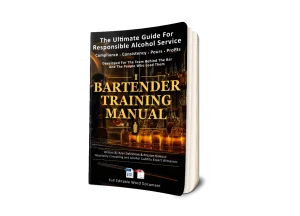
140 pages · 23 chapters
A printable one-pager covering the seven documentation categories that come up in dram shop matters.
When the framework above is in place, the next question is what the training actually contains. The Ultimate Responsible Alcohol Service Manual is the operations document.