TRAINING CURRICULUM · SKILLS PROGRESSION

Bartender competency is not a binary state. A bartender is not either trained or untrained, competent or incompetent. Competency develops in stages, and understanding the stages helps operators build training programs that actually produce growth rather than plateaued performers. This page covers the four-stage skills progression from novice through expert — what each stage looks like in practice, what training and support each stage requires, and how to identify the transitions between them.
It is drawn from 20+ years of building bartender development programs. The progression is not strictly linear — some bartenders move through it faster, some plateau, some skip stages with prior experience — but the framework holds for the vast majority of staff in operator-style training programs.
The novice is learning to execute. Everything requires conscious effort. The bartender knows the recipes but has to think about each step. ID checks are done but feel awkward. Intoxication recognition is happening but the bartender is not yet catching early indicators. Service is complete but slow under pressure.
Novice errors are not character flaws. They are the normal cost of learning. The right response is patient correction, not escalating consequences.
The competent bartender can execute without constant conscious effort. Recipes are automatic. ID checks flow naturally. Basic intoxication recognition is catching most obvious cases. Service rhythm is consistent at moderate volumes. The bartender can handle a typical shift without supervision but is still vulnerable to unusual situations.
The transition from novice to competent is mechanical and predictable. The transition from competent to proficient requires deliberate intervention. Without it, many bartenders spend their entire careers at the competent stage.
The proficient bartender has internalized the work. Execution is efficient. Judgment is sound. Intoxication recognition catches early indicators, not just obvious ones. Difficult situations are handled without escalation. The bartender can work any shift, handle high-volume periods, and train less experienced staff.
Proficient bartenders display behaviors that novices and competent staff do not:
The expert bartender has moved beyond execution into systemic understanding. They see the whole operation. They identify patterns before they become problems. They can design and improve programs, not just operate within them. They are the people other operations want to hire away.
Expert bartenders are the most valuable staff in most hospitality operations — and the most likely to leave when underdeveloped. The most common reasons experts leave:
Operations that retain experts tend to create roles that match the expertise — training director, bar manager, operations consultant — rather than keeping them as front-line staff with senior compensation.
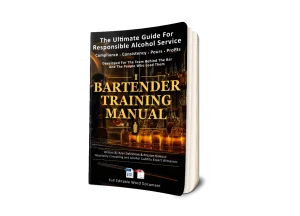
The Ultimate Responsible Alcohol Service Manual contains the curriculum, assessment criteria, and ongoing-education frameworks that move bartenders through these four stages — not just to competent, but to proficient and beyond.
The four-stage model maps cleanly to the four-phase training framework. Each phase of training corresponds to the stage transition it is designed to produce:
Operations that only train to the competent stage produce adequate bartenders. Operations that develop through proficiency produce exceptional ones. The training investment difference is meaningful; the operational difference is dramatic.
Bartender Training Curriculum →The full 4-phase framework
Bartender Competency Pillar →How to assess at each stage
New Hire Bartender Onboarding →The novice start
Bartender Competency Scorecard →Assessment tool for stage transitions
Ryan Dahlstrom
Author & Expert Witness
20+ years of hospitality operations. Author of The Ultimate Responsible Alcohol Service Manual and active dram shop expert witness.
Curriculum · assessment · growth
Stage 01 · Weeks 1–8NoviceLearning to execute
Stage 02 · Months 2–9CompetentExecuting without conscious effort
Stage 03 · Months 10–24ProficientSound judgment under pressure
Stage 04 · Year 2+ExpertDesigns and improves programs
The Manual contains the curriculum, ongoing-education frameworks, and assessment criteria that move bartenders from novice through proficient and beyond — with the documentation to prove it at every stage.