TRAINING DOCUMENTATION · TRAINING LOG TEMPLATE

A bartender training log is the documentary record of training delivered to each employee. Without it, training exists only in memory — and memory does not hold up under deposition, audit, or insurance review. This page covers the fields every training log should include, how to structure per-employee versus per-event logs, retention requirements, and includes a downloadable template.
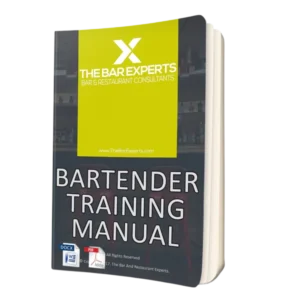
A ready-to-use training log template with all required fields, structured for per-employee and per-event tracking, with signature lines and assessment columns. Designed to defend against the documentation gaps that recur in dram shop matters.
No spam. The template plus occasional updates from Ryan Dahlstrom on training documentation and dram shop matters.
Every training log entry, at minimum, records twelve fields. The template captures all of them in a single row per training event:
An entry missing any of these fields creates a specific cross-examination opening. The opposing expert who notices a missing trainer signature is going to ask why — and the establishment now has to explain. Capturing all twelve fields is a small operational discipline that pays for itself the first time it matters.
Effective training logs maintain two views of the same underlying data. The template is structured so a single entry populates both views — no duplicate work, but both views are queryable when needed:
Answers: “What has this employee been trained in?”
Every employee has a file containing all their training records, in chronological order. This is what gets produced if a specific employee’s training history is questioned — in a dram shop matter, insurance review, or HR dispute.
Answers: “Who was trained on this topic?”
Every training event is also logged with the list of employees who attended. Useful for verifying group training events reached specific employees and reconstructing training coverage across the team.
The per-event log is particularly important for refresher and ongoing education documentation. When four bartenders attend a quarterly responsible service refresher, the event log entry captures all four names from a single training event — more efficient than duplicate entries across four personnel files.
The downloadable template provides a structured format with:
Both formats are acceptable. Paper logs have the advantage of physical signatures that are harder to dispute. Digital logs have the advantage of searchability, backup, and ease of report generation. Hybrid approaches — digital logs with signature capture, or physical logs scanned into digital storage — capture benefits of both.
Whatever format is chosen, three requirements apply:
Retention requirements vary by state and circumstance. General guidelines:
When in doubt, retain longer rather than shorter. Storage costs are low; discovery of missing records during litigation is expensive.
Training Documentation Pillar →The full documentation framework
Training Acknowledgement Forms →Acknowledgement form specifics
Bartender Training Checklist →The checklist that pairs with this log
Bartender Training Curriculum →The underlying curriculum
Ryan Dahlstrom
Author & Expert Witness
20+ years of hospitality operations. Author of The Ultimate Responsible Alcohol Service Manual and active dram shop expert witness.
All 12 required fields, per-employee and per-event views, signature lines, assessment columns. Ready to use.

Includes the full documentation set
The Manual contains the training log template alongside the full documentation infrastructure — acknowledgement forms, scorecards, incident reports, and the complete written program.